The French “English” City – Montreal
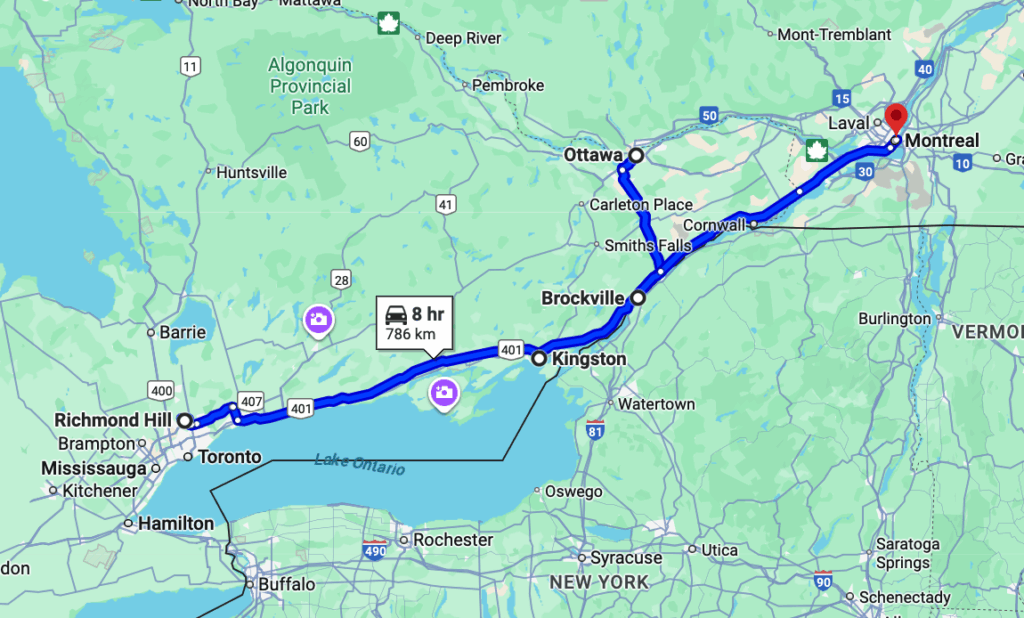
After a round of golf on the Thousand Island Parkway, we made tracks to Montreal. As a large city I didn’t feel it necessary to book a hotel in advance. But once again, we were plagued with the problem of a Thule roof carrier keeping inner city garages off limits with our 7-foot clearance. Since staying in the historic district was not going to work we ended up in a suburb 30 minutes away. Luckily the mid-rise Holiday Inn was brand new and suited us well.
Montreal, founded as the missionary settlement Ville-Marie in 1642, boasts a rich history as a French colony and a major fur trading center. It later became a vital transportation hub, evolving into a significant commercial and financial center in Canada. While French Canadians form the majority, the city has a diverse population and is known for its cosmopolitan culture. Montreal’s history is marked by periods of conflict, particularly with the Iroquois, and later by British rule. Today, it remains a major Canadian city with a strong French identity and a vibrant, modern atmosphere.
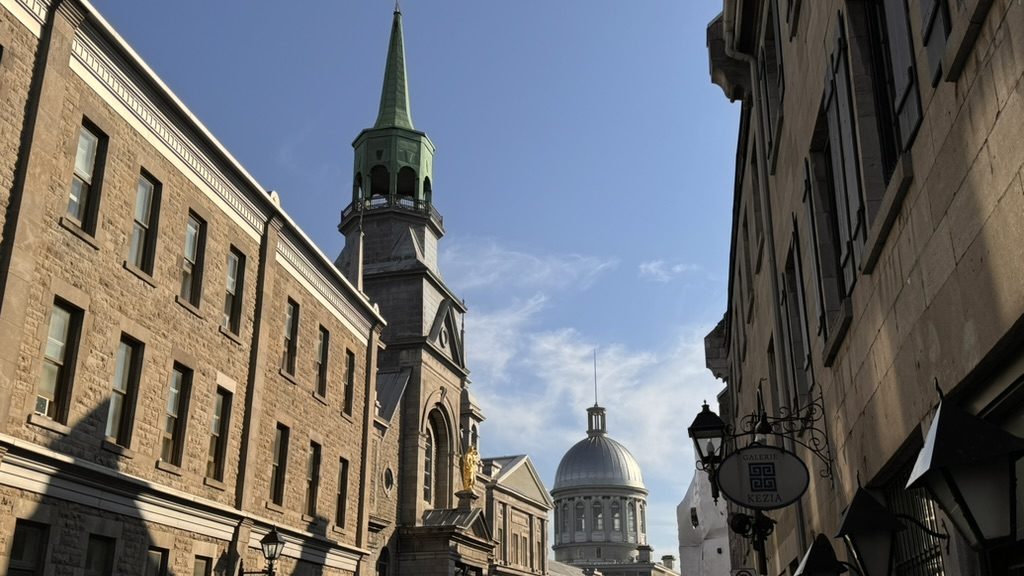
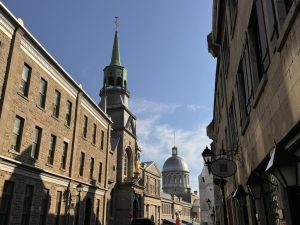
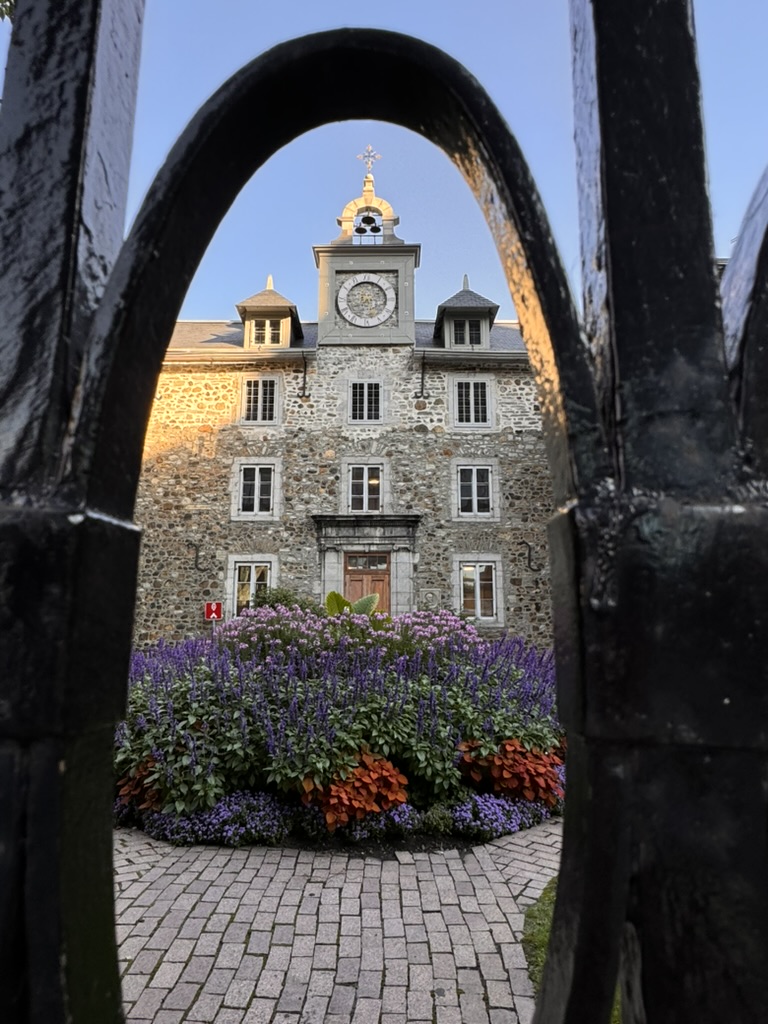
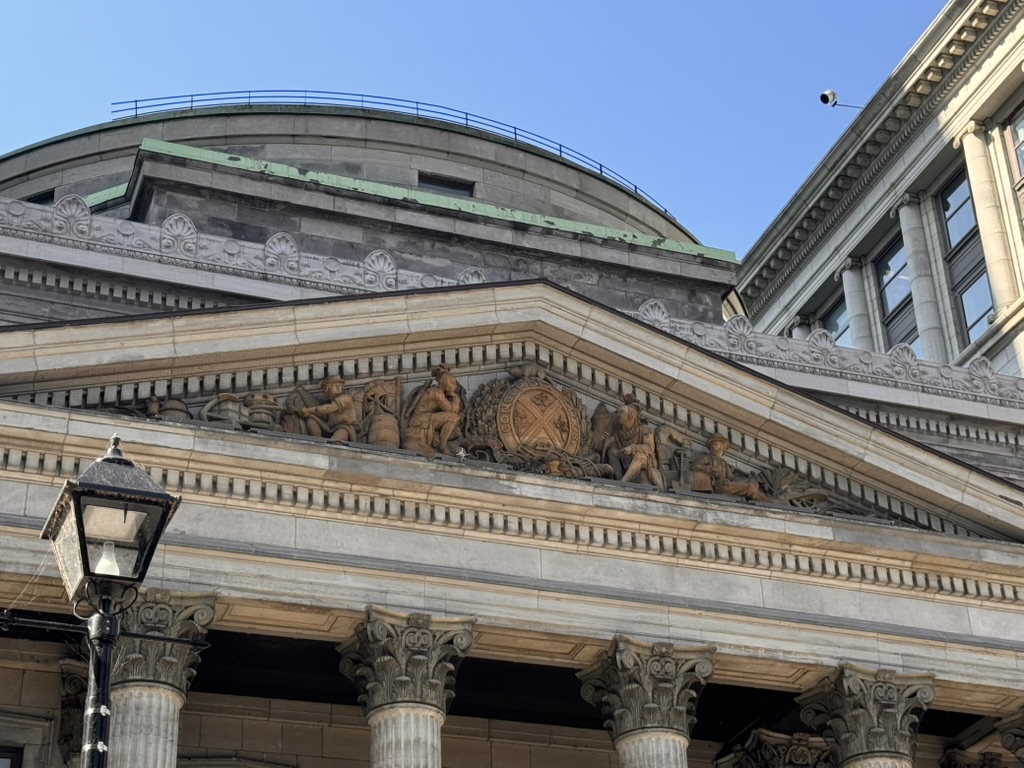
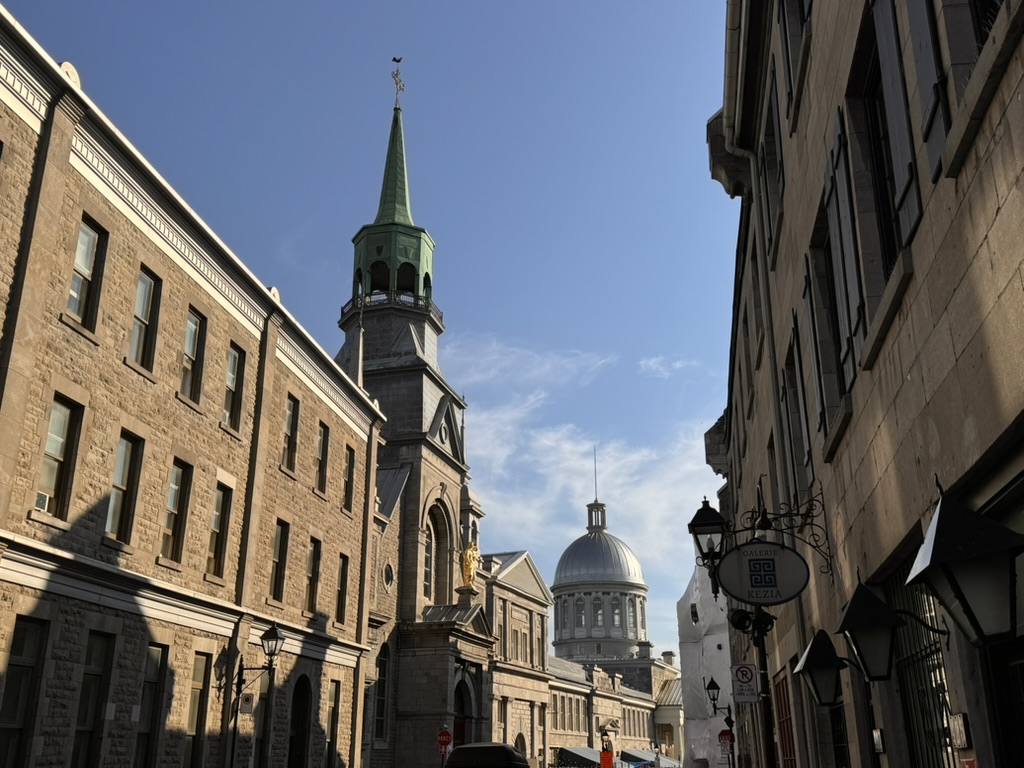
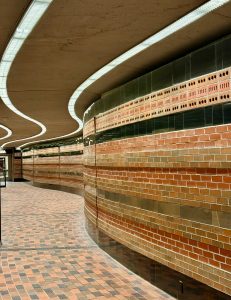
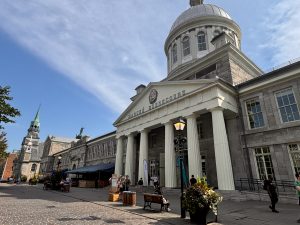
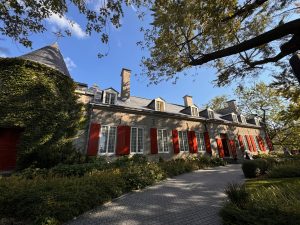
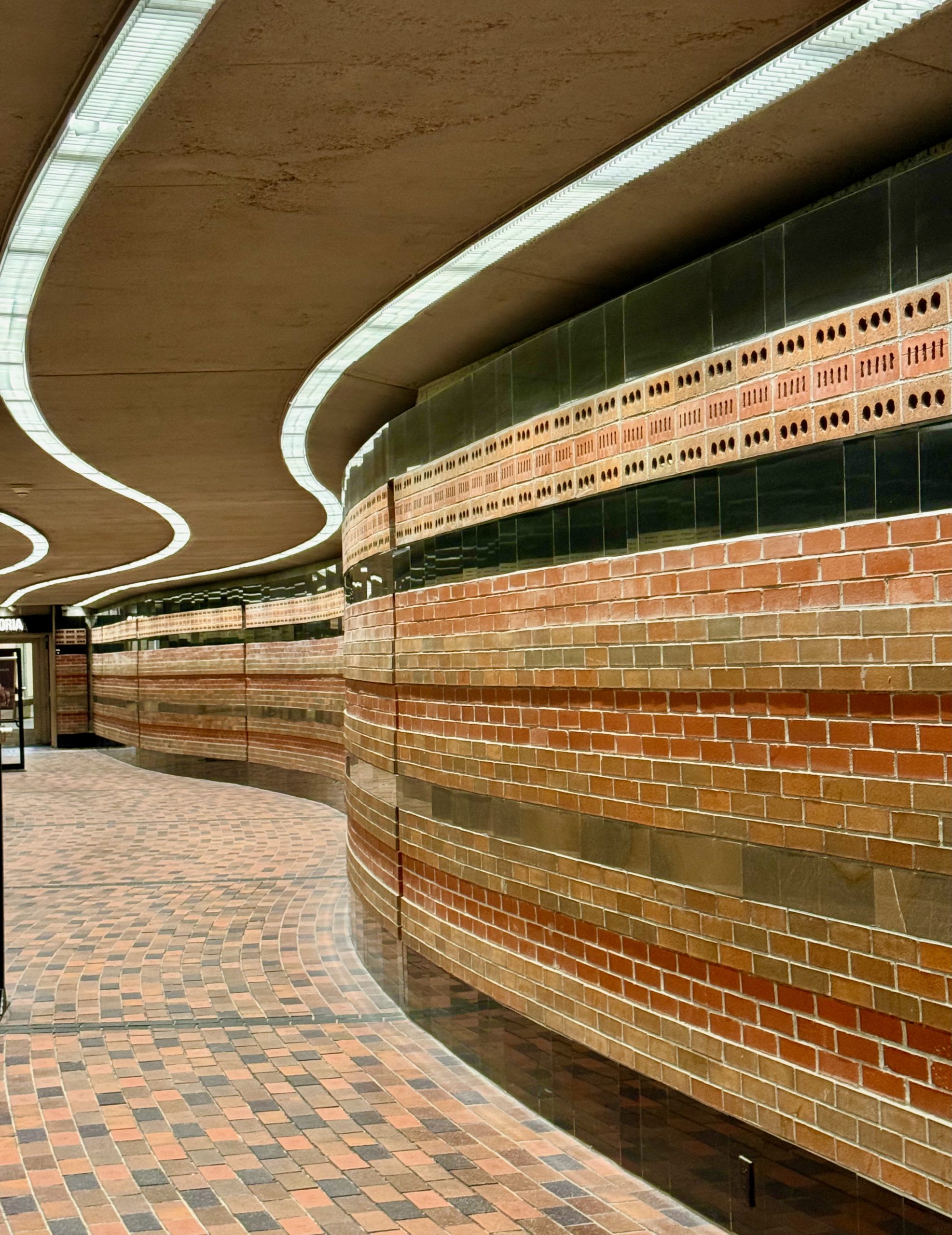
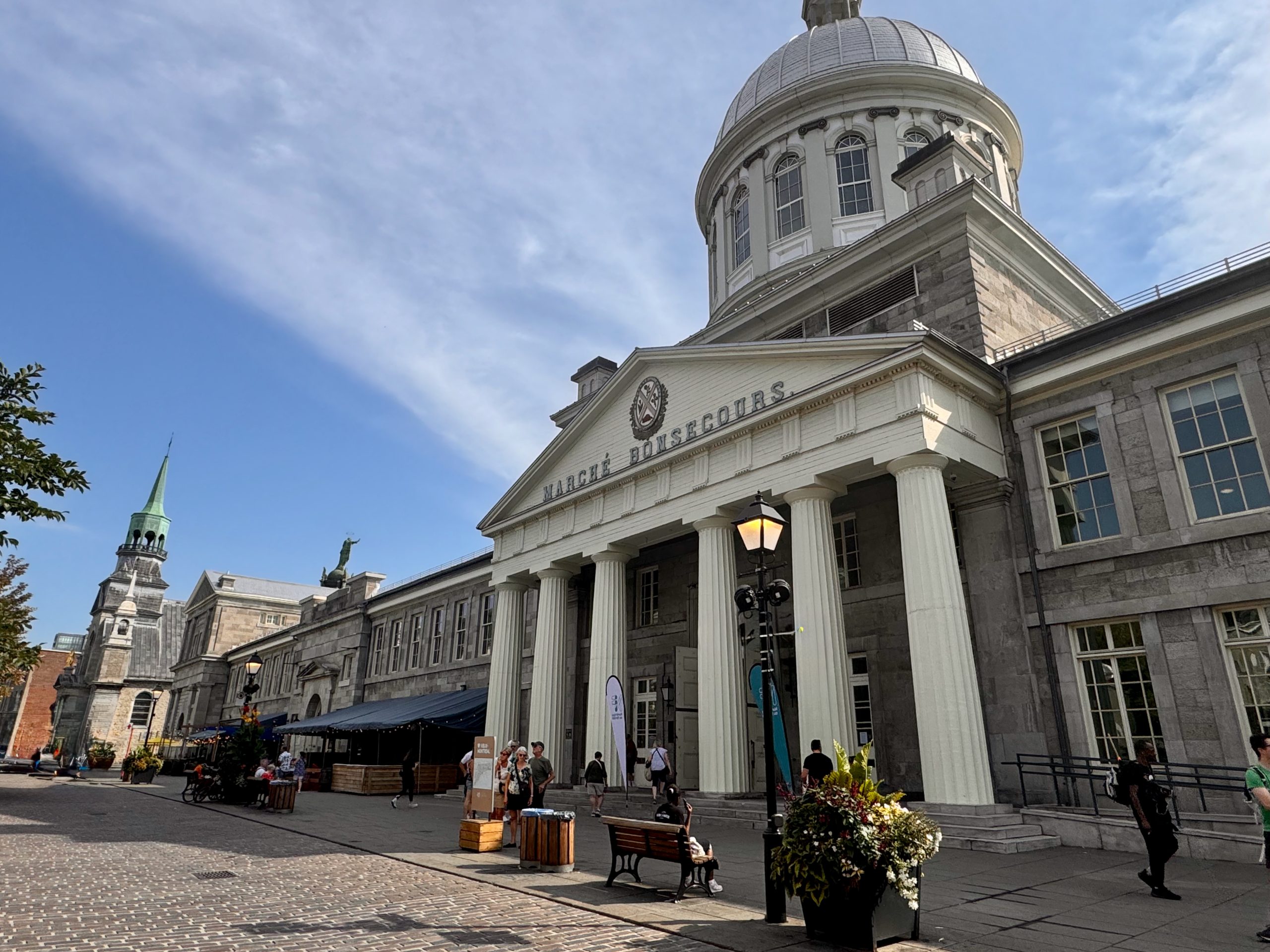
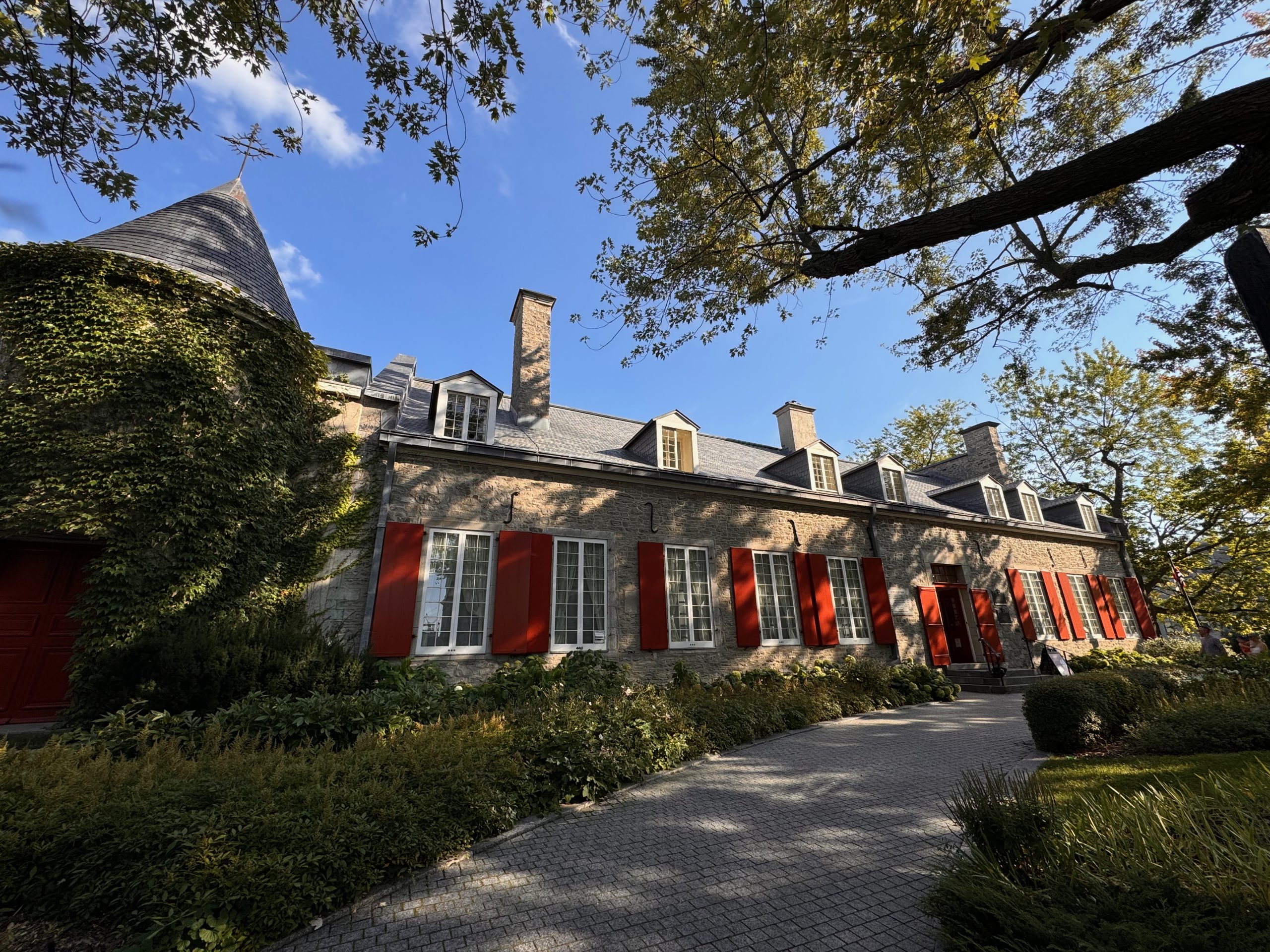
The historic cobblestone lanes of Old Montreal are brimming with charming architecture and interesting street art. We joined a walking tour of the historic center our first day and had a great overview of this interesting city. Montreal’s Underground City is an impressive subterranean pedestrian network that spans 20 miles of tunnels. The network is largely climate-controlled, making it a perfect escape from Montreal’s harsh weather conditions, especially during winter. You can find over 1,600 shops and facilities within the city and it connects three major shopping malls, hotels, offices, and more. It’s also a great way to get to the metro.
The Two Snobs sculptures at opposite ends of a city block depict an English man with a pug and a French woman with a poodle, both with upturned noses, staring away from each other and seemingly oblivious to their dogs’ interest in one another. The sculptures are a playful representation of the cultural divide and perceived superiority between French and English Canadians.
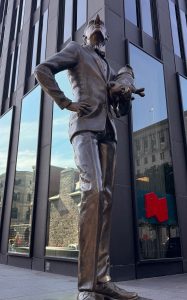
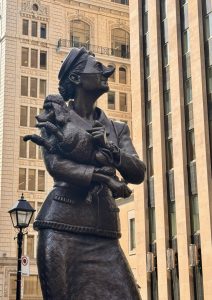
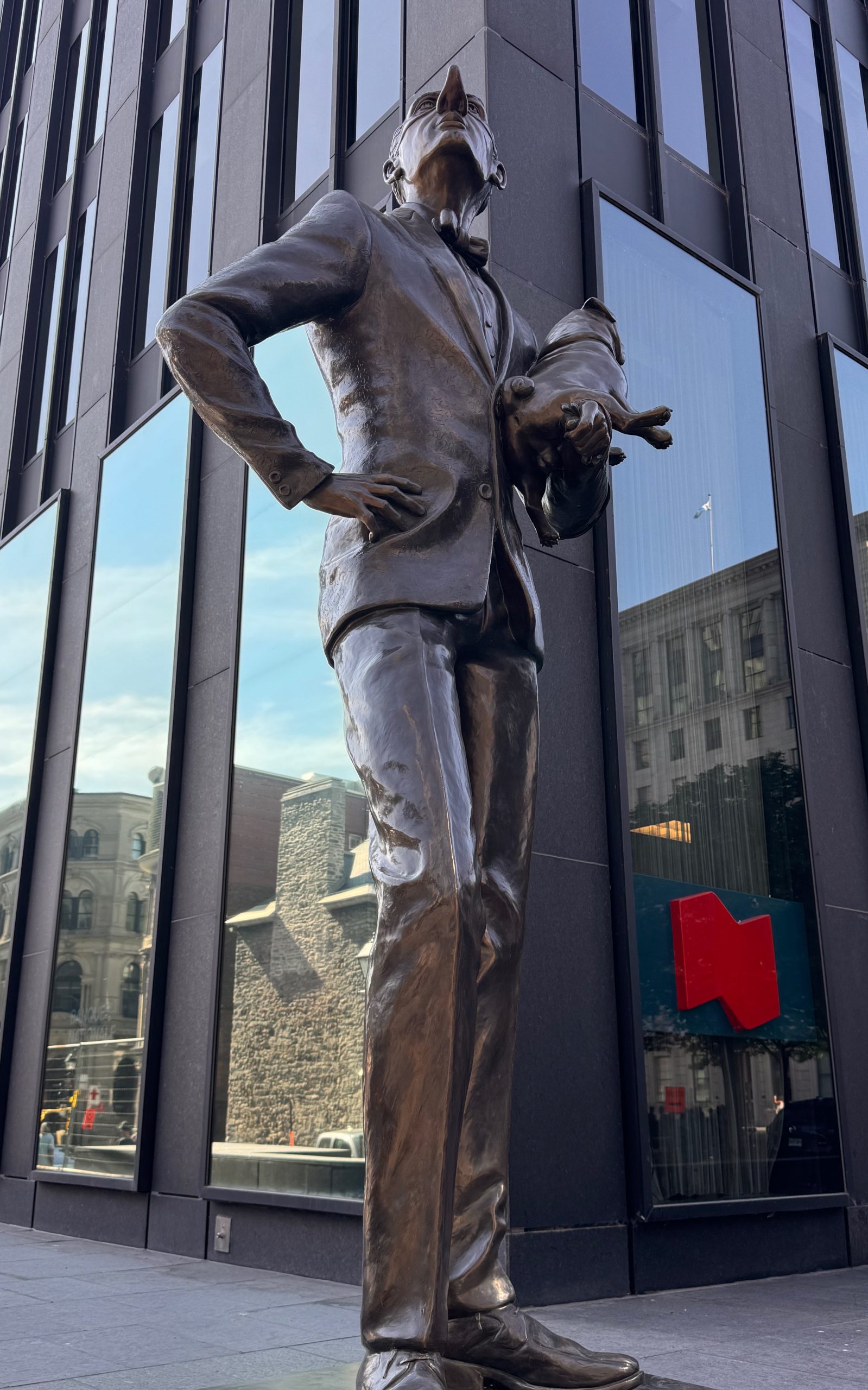
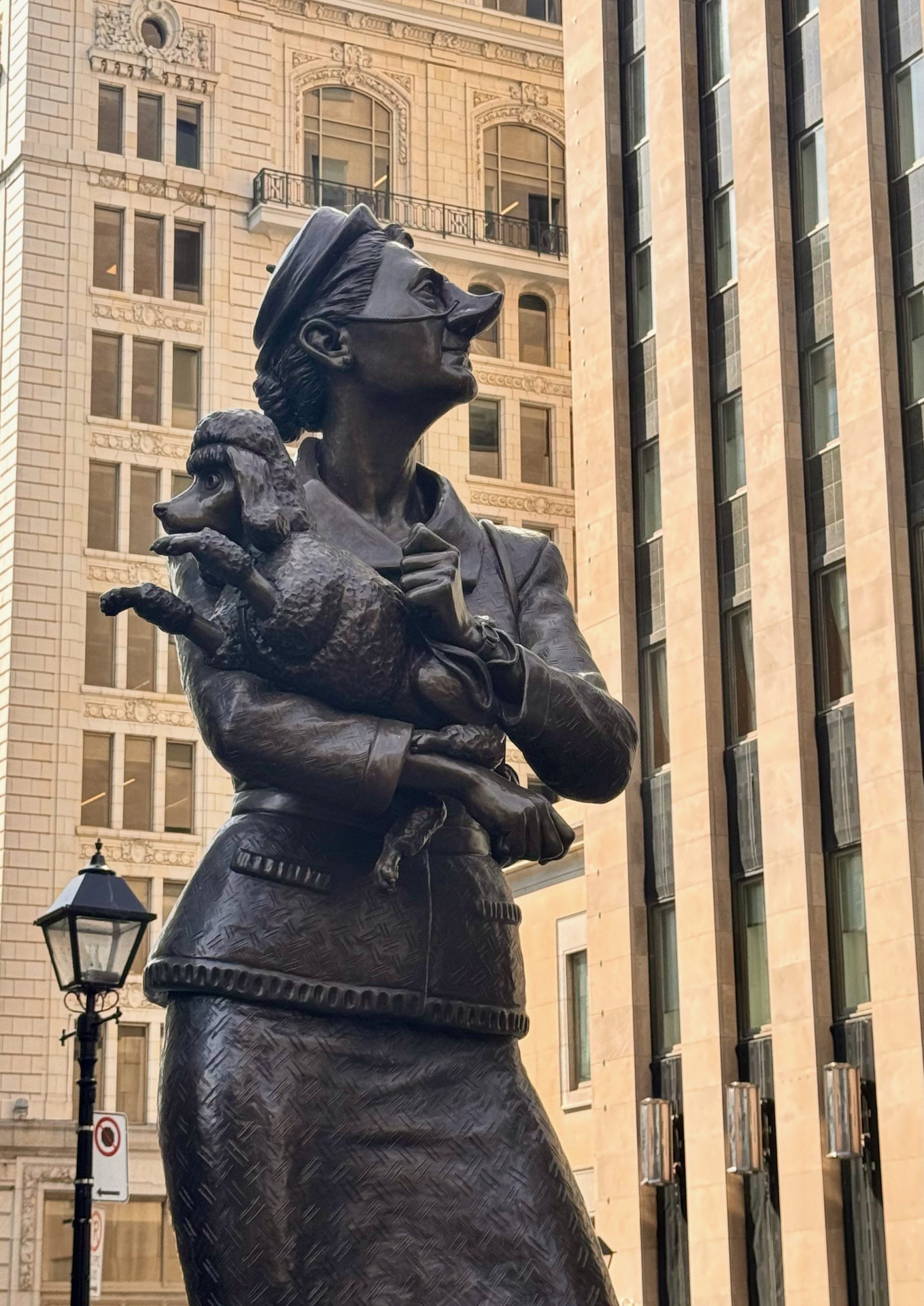
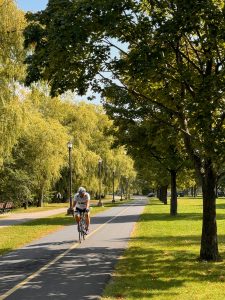
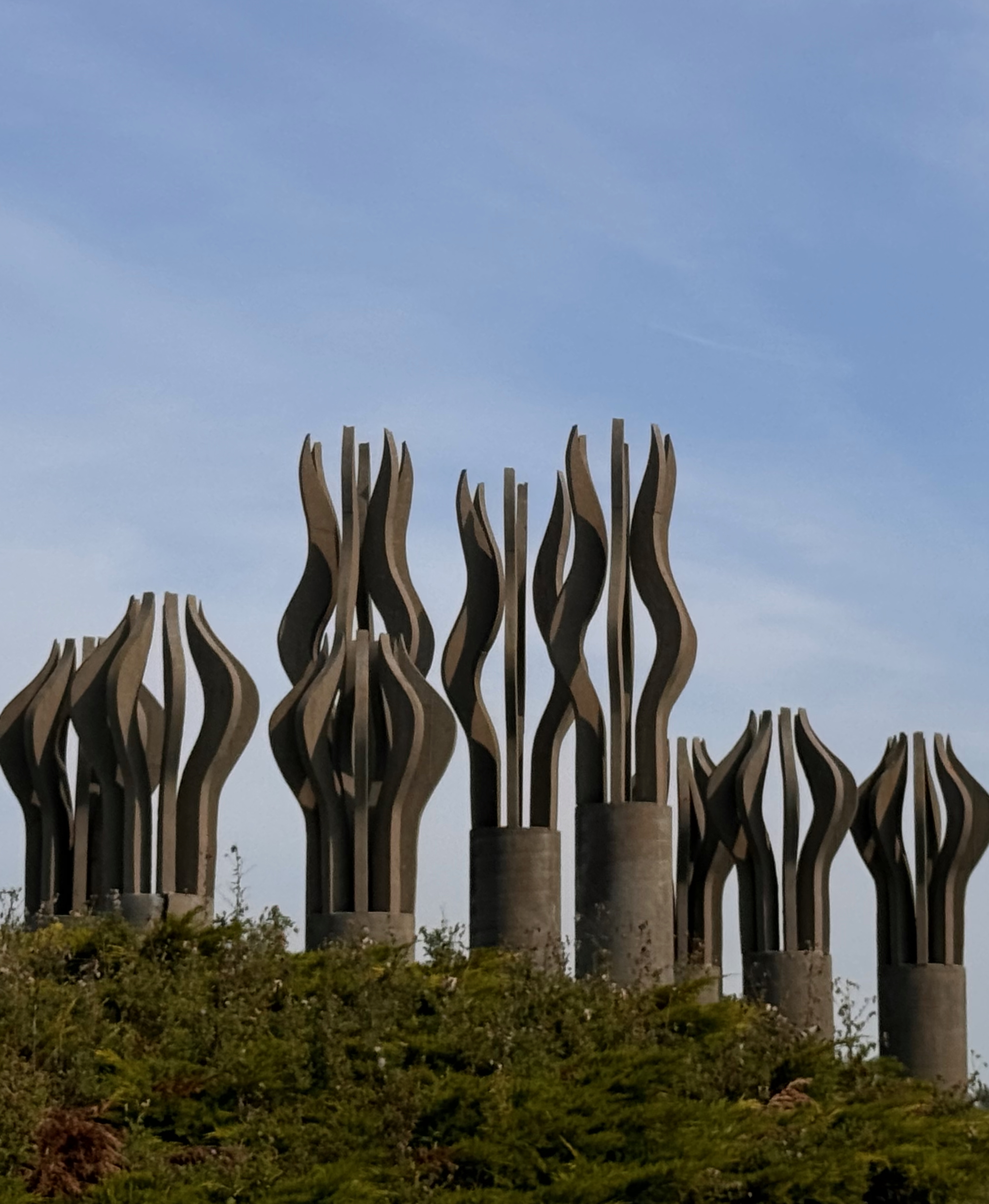
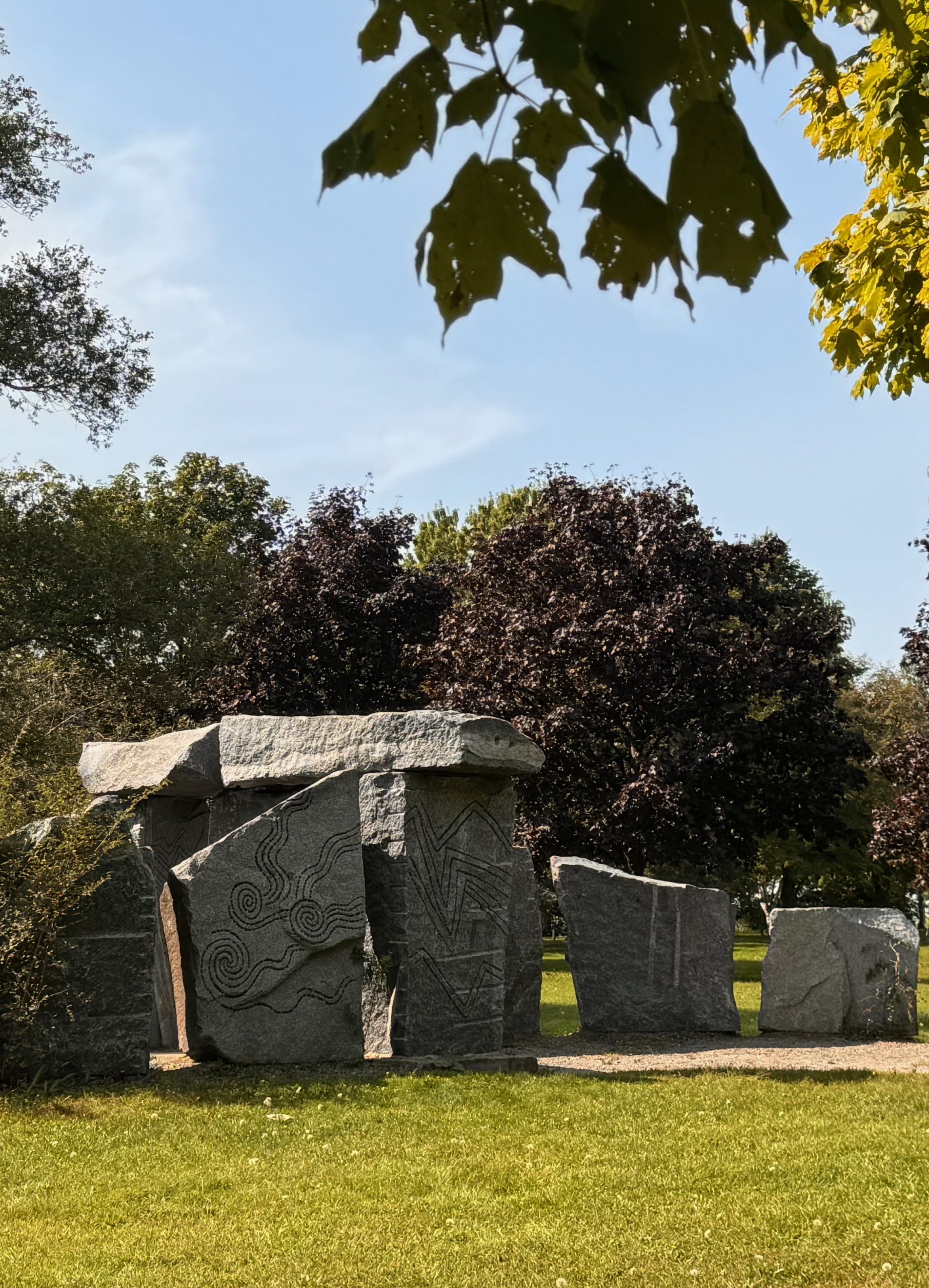
Our second day we rented bikes to ride along the Lachine Canal to Rene-Levesque Park. It was built in the early 1800s so navigation could bypass Lachine Rapids on the St Lawrence. Our ride took us to the end of the park which is a pretty green space with public art permanently displayed.
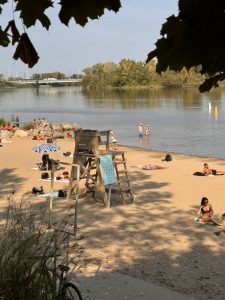
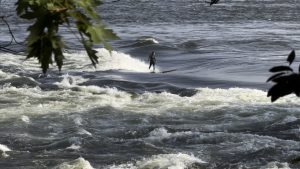
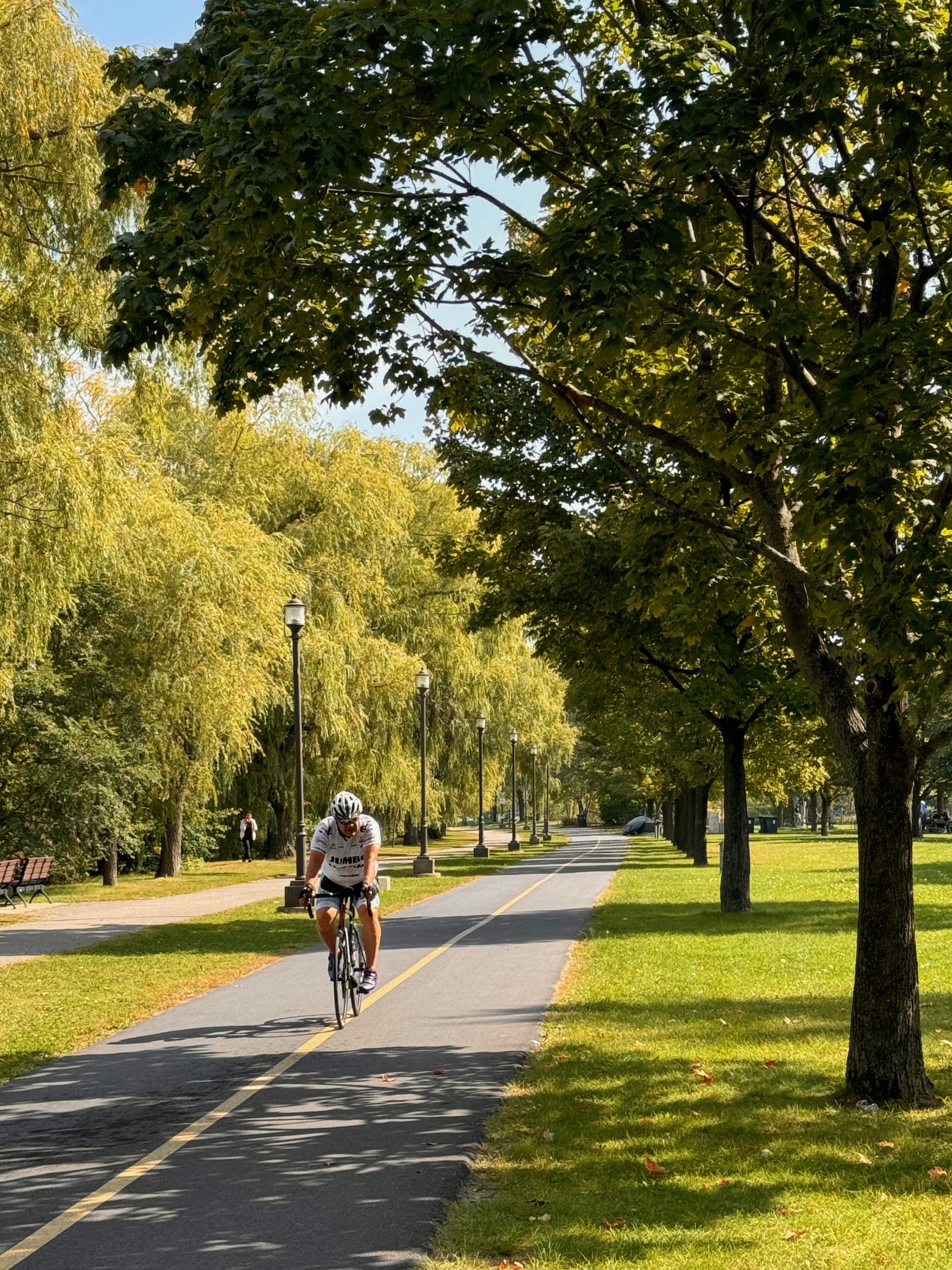
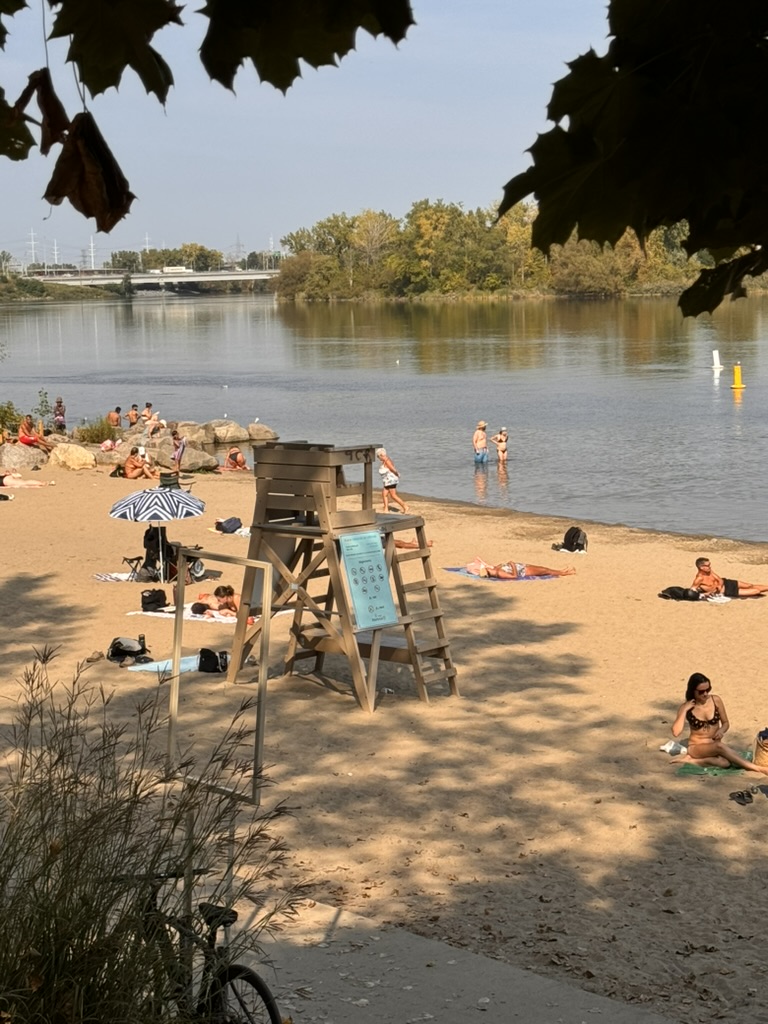
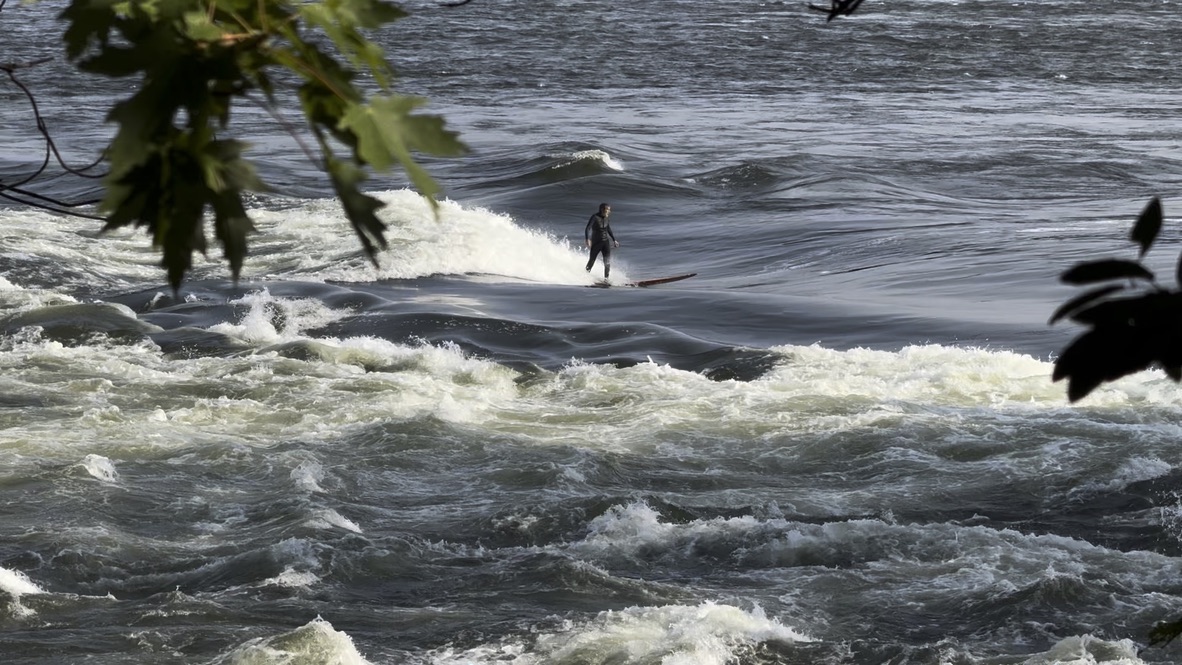
We circled back along a bike path on the St Lawrence River. A stretch of parkland follows the water for miles and offers a multitude of recreational activities including swim beaches, playgrounds, bird sanctuary, dog park and fishing piers. We were mesmerized by the Lachine Rapids which invite surfers to hone their skills on the endless pattern of powerful waves. These waves are formed by the river’s significant drop in elevation over a short distance and the unique configuration of the riverbed.
Our route from Toronto to Montreal